WASHINGTON – When the Rev. Martin Luther King Jr. envisioned his dream of the “beloved community” where his children “would be judged not by the color of their skin but by the content of their character,” did he imagine the millennial post-racial society? Is King’s promised land a place where race plays no role in qualifying individuals in the U.S.?
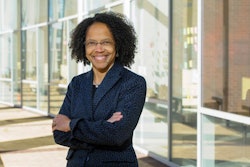
Professor Trina Jones of the University of California Irvine School of Law prefers a contextual reading of King’s words, giving them meaning within the framework of Jim Crow America.
“This brand of colorblindness was in fact useful at a certain point of time in a segregated society … it was a powerful progressive tool for people of color who were subordinated because at least it brought them to the level of Whites in the eyes of the law,” she said. “So colorblindness had some utility but it’s problematic today.”
So alarming and over-reaching is today’s conception of color-blindness that the response by the nation’s courts to reverse discrimination claims has slowly eradicated race-based resource allocation in public institutions, law professors asserted during a Friday symposium titled “Post-Racialism in American Law and Lawyering,” hosted by the Georgetown Law Journal.
“Post-racialism might destroy equal protection jurisprudence,” said University of California Irvine School of Law professor Mario Barnes, who is also co-authoring a paper with Jones that follows the legal and historical roots of post-racialism.
Barnes defined post-racialism as “the belief in the attainment of racial progress that signals the end of the relevance of race” but he dismisses such ideas as “delusional” pointing instead to the social and economic disparities that burden people of color.
Examining the opinions of Supreme Court justices as far back as the Plessy v. Ferguson case, Jones and Barnes find evidence of a racial ideology that continues to justify White supremacy in national systems.
“Colorblindness is not new,” Jones said during her presentation before an audience of 50 at the Georgetown University Law Center in Washington, D.C. “There is a perception that racism is perpetuated by individual, self-professed bigots on the fringe of society but that limits racism to individual acts and ignores how systemic it is in society.”
Presenters used contemporary examples of court decisions that reinforce post-racialist thinking and in some cases; signal a rollback on civil rights — particularly in immigration cases, said UC Davis School of Law Dean Kevin Johnson.
“Race is parcel to all American life,” said Johnson, who also serves a professor in Chicana/o studies at the California institution.
Affirmative action and employer discrimination suits have long operated on the support of civil rights legislation that have worked for the last 46 years to reverse oppression and “pay back” wrongs against under-represented groups, according to Johnson.
“The function of post-racialism is to convince us that we are camouflaging the role that race plays in the culture,” said professor Girardeau Spann of the Georgetown University Law Center, an author of a book on the subject. “The Supreme Court has always been complicit to sacrifice race interests to the benefit of the White majority. What passes as race neutrality is the reflex to revert to the White privilege baseline.”
Spann said the emerging ideology makes three assumptions. First, minorities are no longer the victims of significant racism. Secondly, any race-conscious efforts that benefit racial minorities constitute racial discrimination — or reverse discrimination. And finally, society is on a level playing field so whatever disadvantages emerge are just attributable to the minorities themselves, not the culture.
He refers to these beliefs as “post-racial discrimination” or “post-racial racism.”
“Race neutrality is unattainable. Colorblindness preserves the racial status quo,” Spann said. “In a culture in which we have ‘transcended’ race we’d expect equal resource allocation.”
But, the panelists agreed, the vital statistics for minorities in this country tell a different, devastating story.
An earlier version of this story incorrectly identified Professor Mario Barnes as a faculty member at the University of California-Davis. He is actually employed at the University of California Irvine School of Law.