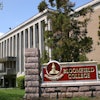
With a 30-percent increase in enrollment since the start of this economic downturn, Salt Lake Community College in Utah is on a path of unprecedented growth. Unfortunately, state financial support is moving in the opposite direction, with a cut approaching 17 percent.
“I’m scared to forecast enrollment for the future,” said Joy Tlou, a spokesman for the regional institution serving more than 24,000 students. “There are people returning to school because of work force changes and layoffs. We may have some tough decisions to make.”
Salt Lake’s example is increasingly common among community colleges, many of which are experiencing steady enrollment increases during the recession while receiving less state money. One potential bright spot, however, was President Barack Obama’s American Graduation Initiative (AGI). Unveiled last year, the plan called for $12 billion for community colleges, including a Community College Challenge Fund to develop new or improved programs, grants to modernize facilities and funding to offer more online coursework.
AGI was part of the Student Aid and Fiscal Responsibility Act (SAFRA), which passed the House of Representatives late last year. But the measure never made it intact to the Senate floor. And, while many SAFRA provisions are now in a massive budget reconciliation bill along with health care reform, lawmakers struck out AGI to meet budget targets. Lawmakers did provide $2 billion in other community college aid, but it was less than many had hoped.
“We were quite excited when we heard about the president’s [AGI] initiative,” Tlou said. “We’ve been waiting like everyone else.”
The graduation initiative’s demise was due largely to financial pressures on the SAFRA bill, which was to increase higher education and Pell Grant investments by eliminating student loan subsidies to banks and requiring colleges to use cheaper government-issued Direct Loans. But many colleges began moving to Direct Loans even as SAFRA moved through Congress, cutting the potential savings.
Once estimated to save $87 billion, SAFRA’s projected savings was down to $61 billion by spring 2010. With lawmakers under fire for excessive spending, Congress opted to devote some of that windfall for deficit reduction.
In addition, surging enrollments put increased pressure on Pell Grants, prompting lawmakers to allocate more money there. Pell would get $36 billion under the budget reconciliation bill. Minority-serving institutions were assured another $2.5 billion, and a new initiative on college completion received some funding. As a result, there was less money for two-year institutions.
Nonetheless, community college leaders say they support the reconciliation bill. “We’re happy with it,” said David Baime, vice president for government relations at the American Association of Community Colleges (AACC).
He acknowledged that AGI had a “big impact” on AACC member institutions. “Colleges expected this to be enacted,” he told Diverse. Nonetheless, all the money was to be competitive, so colleges recognized that funding was not guaranteed. “Colleges would have been banking on that funding at their own peril,” he said.
Despite the demise of AGI, community colleges did recover with a small victor—a $2 billion allotment in the reconciliation bill. This money would not go specifically to AGI but to a little-known provision of last year’s economic stimulus package—career-training grants to help dislocated workers.
Though included in the stimulus, this project was unfunded and largely forgotten until recently. “It’s an outlier, that’s for sure,” Baime said of the Community College and Career Training Grant program. But in a complex Capitol Hill environment with health care and student loan reforms rolled into one package, community colleges are pushing hard for the funding.
The $2 billion would be available via competitive grants in $500 million annual allotments from 2011 through 2014.
Looking forward, AACC will ask Congress to take other action to support two-year colleges this year. One example is another U.S. Labor Department grant program for community colleges. In February, the Obama administration recommended termination of this $125 million initiative, Career Pathways Innovation Fund, saying it would duplicate the purposes of AGI. Now two-year college leaders are pushing for restoration of this funding.
The Obama budget also called for terminating the $103 million tech-prep program for activities linking high schools with community colleges. His budget would combine this program with state grants for career and technical education. Congress has resisted previous attempts to remove tech-prep as a separate line item in the federal budget.
After finishing the reconciliation bill, Congress likely will turn its attention to the federal budget for fiscal year 2011, which begins Oct. 1.
Meanwhile, at the signing to make the student loan changes law, Obama offered community college leaders hope by announcing that a White House summit would be held this fall on community colleges, which he called “one of the great, undervalued assets in our education system.” The conference of educators, students and business leaders will be led by Dr. Jill Biden, the vice president’s wife and an English professor at Northern Virginia Community College.