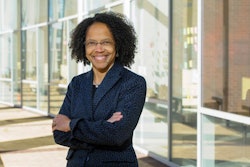
Nullifying Inequities in the Criminal Justice System
WASHINGTON — If you were a brilliant, well-trained African-American male who hoped to be tenured at an elite White law school, the last thing to do would be to advance a legal theory that supports letting Black criminal defendants go free — even when they are guilty.
Yet that is exactly what George Washington University Law Professor Paul Butler has done.
So it came as a shock to many when he was awarded a scarce and coveted tenure appointment in 1997. But the saga of how he came to the law — and more specifically to the controversial theory of jury nullification — is a study of sound legal research, the inequities of the criminal justice system and the role of the Black faculty as agents of social change.
Butler recently sat down with Black Issues Publisher Frank Matthews to discuss his saga. The following is excerpted from their conversation.
BI: Critical race theory refers to a body of study that, among other things, frames the criminal justice system in a racial context. At its best, what can we look forward to in an optimum situation from critical race theory? How is it going to change the dynamics of how we understand the law and how it operates in the lives of African Americans?
PB: I think one of the most helpful understandings we get from “Critical Race Theory” is why African Americans and other minorities aren’t there yet, why we haven’t advanced, and especially in the legal part, which is how I approach critical race theory.” If you think about all these wonderful formal gains that were made in the 1950s and 1960s through the work of people like Thurgood Marshall, Charles Hamilton Houston and William Hastie, the question becomes: Why aren’t we there yet? Discrimination is unconstitutional; at least, by the government it’s unconstitutional. Private discrimination is either illegal or frowned upon. So one of the things that “Critical Race Theory” does is explain the limits of the law, and the limits of policy in terms of improving race relations and improving the plight of people of color.
BI: Of the scholars who offer other explanations as to why we are not there, whose work most impresses you as offering a plausible explanation?
PB: Derrick Bell.
BI: And why is that?
PB: Derrick Bell, Kimberly Crenshaw and Richard Delgado are the architects of “Critical Race Theory.” And I think Derrick Bell’s work on the permanence of racism is very persuasive. When I look at some of his ideas — that racism is permanent, that progress is cyclical and that America sees itself as a White country — I find these to be very compelling explanations for why more progress hasn’t been achieved. Sometimes I think he’s a little too pessimistic about what the law can do, and that’s where I think the work of Kimberly Crenshaw is very helpful. You can’t ignore that people of color are materially better off in important ways now than they were in the ’50s, ’60s and ’70s. She explains how the law can be used to make things incrementally better even if they can’t permanently eradicate racism and discrimination.
BI: Is that the vicious cycle that we find ourselves in, subject to the whims of who happens to be on the judiciary at any given time?
PB: I think that we have only found the judiciary being hospitable to our claims relatively recently in our history. Now the court seems to be backtracking on its commitment to equality for African Americans and other people of color. I think that changing the law in order to improve your lot is part of the American way. One of the interesting reactions to my work in jury nullification is that when I advocate selective nullification by African Americans is that it’s somehow wrong because it’s un-American. Why is it un-American? Because in America, if you don’t like the law, you aren’t supposed to subvert it; what you try to do is change it. How do you change it? Well, one of the things you do is petition the legislature. So when we look at African-American history, we’ve been very loyal and faithful patriots at using traditional means to try to change the law and those haven’t worked. One, because in some ways, the American practice of democracy, like the courts, isn’t hospitable to our claims. And two, again, the law itself has limits.
BI: What is it, then, that African Americans need to be doing at this particular point in time given the judicial temperament in this country, especially the federal temperament?
PB: Given this Supreme Court, I don’t think that we want to present a lot of our important claims. We’ve seen, with affirmative action and with voting rights and with race and crime concerns, that the court has not addressed our concerns in a fair or just manner. It almost always rebuts the legitimate concerns of people of color nowadays.
BI: So you endorse the Piscataway, strategy of withdrawing cases you can’t win?
PB: Oh, absolutely, absolutely. And again, you always have this conflict in public interest litigation with people who want to achieve very specific things, who aren’t necessarily concerned about the big picture. I was explaining to my students in the context of, let’s say, the gays in the military debate now. This isn’t a good time to present that to the Supreme Court because they are going to affirm the existing policy. But if you have some soldier who’s been kicked out of the army because he’s gay, then he’s going to want to take it to the next step. So you always have this conflict. The argument is that what little Miss Brown [Brown vs. Board of Education] wanted was a superior education, a superior public education. She didn’t care about going to school with White kids. She just wanted the best education. What the legal defense fund wanted, or the NAACP at that point, was integration. One of the things that critical race theory has been helpful in helping us see is that sometimes there might be conflicts between what the civil rights leaders want and what’s in the best interest of people of color.
BI: How did you come to jury nullification?
PB: There are two ways to answer that question: How did I come to learn about it and how did I come to advocate for it? I learned about it when I was working as a prosecutor. After law school, I worked for a law firm here in Washington for a few years, and then I joined the (U.S.) Department of Justice. I was doing white-collar crime, which is the only kind of prosecution that I could have envisioned myself doing at Justice or anywhere. If you didn’t have trial experience, they sent you to the local court, the D.C. criminal court, to more or less practice on these people before you tried your really important cases. So I was detailed to the local prosecutor’s office here for a six-month stint to get trial experience. I was told that in the District of Columbia, most of the jurors were African American. We would convince juries beyond a reasonable doubt of the defendant’s guilt and the jury would acquit. And the reason that they would acquit was because they didn’t want to send another Black person to prison. It was almost a truism that for certain kinds of defendants, if it was a defendant who looked young, who was charged with a low-level drug crime, that jury was not going to convict no matter what you did. There were two things I observed which were wonderful. One was, working with these jurors in the District of Columbia and seeing the care with which they approached their work, I really regained confidence in the jury system. I really did think these jurors were thinking hard about what they were doing. In other cases, like with violent crime, for example, they weren’t nearly as likely to acquit if they were convinced of guilt. So they really did seem to be thinking selectively and carefully about their work and I didn’t think it was based on some kind of blind prejudice or ethnocentrism.
BI: What was the other thing you observed?
PB: I grew up in a completely African-American community in Chicago, and I really didn’t know any White people at all until I was a teen-ager. It was a wonderful environment to grow up in because I just had all this faith and confidence in myself and also in African-American people. I thought that we were capable of doing anything that we put our minds to doing. And then I went to Yale College and to Harvard Law School, worked at the Justice Department and I found myself thinking of Toni Morrison’s phrase, ‘He’d lost his ancient properties.’ And I think that in some ways that happened to me at Yale and at Harvard Law School. I had all this book learning about African Americans and the history was encouraging in some ways, but the present wasn’t too encouraging. And I got to the D.C. Superior Court and in some ways it was a very Black world. Obviously the criminal defendants were Black, but also the jurors were Black, many of the judges were Black, several of the prosecutors and defense attorneys were Black, police officers were Black. And there, of all places, I regained my ancient properties. It’s ironic to regain faith in your people in a criminal court. But just seeing all of these people doing all of these professional jobs and really approaching their work with care, it was a reaffirming experience for me. And then I became even more disturbed about the fact that there were all these Black defendants, that all of the people we were prosecuting were African American. So that was number one. And number two was the faith I gained in the jury system and this respect I gained for these African-American jurors. These were the same people who go to Bible Way Church and Metropolitan Baptist Church, and then they were coming to this courtroom and the judge would tell them, ‘If you believe this person is guilty, then you should convict.’ And they would refuse to. And I thought, ‘Wow, how about that! What is making them do that?’ And so I started thinking about this, and talking to some of the jurors, and what I learned was this determination to acquit in selective cases was made on the basis of a cost-benefit analysis. I think what these jurors thought was, ‘Are we, as a community, better off with this person in prison or out of prison?’ And sometimes, in the case of nonviolent, victimless offenders or defendants, the answer was: ‘We’re better off with this person not in prison.’
BI: Some people might say that when all-White juries were convicting Black people throughout history, say the Scottsboro incident, that that was an operation of jury nullification.
PB: No. Jury nullification is a legal doctrine that only refers to acquittal; acquitting without regard to the evidence, or acquitting despite the evidence. The power of jury nullification comes from the Eighth Amendment to the Constitution, the Bill of Rights, which says that if a jury acquits, there is nothing that a judge can do about it. It’s the double-jeopardy clause. You can’t be tried for the same crime twice, even if the judge thinks that you’re guilty. Now, we don’t have that same right for convictions that are done without regard to evidence. So if someone is convicted and the weight of the evidence suggests that conviction is unfair, then the conviction can be overturned. That’s the theory, but there isn’t any right to convict without regard to the evidence. There’s a law, and actually jury nullification has a long and proud history as part of our constitutional rights, and it’s part of what makes us free as a people.
BI: Was the acquittal in the Amadou Diallo case an example of jury nullification?
PB: No, I don’t think so, because they had a reasonable doubt as to the intentions of the policemen. Race was certainly a factor. If it had been four Black policemen who shot a White man with a wallet, it would have been an entirely different result. (see related story, pg. 33.)
BI: Was the Rodney King verdict jury nullification?
PB: Yes. There was no doubt in the jury’s mind, because of the videotape of the beating. That jury chose to acquit in spite of the evidence. They didn’t feel that the policemen should be punished for beating a Black man.
BI: Do you feel that some would see this as somewhat of a balancing out? So many Black folk were sent to the chair and incarcerated throughout history in spite of the evidence, that this, what you’re doing, in some way kind of levels the playing field, the historical playing field?
PB: Not the way that it’s practiced now. Some people have made that argument, but it’s never been a persuasive argument to me, because, first of all, when we think about violent crimes, certainly most of the victims of those crimes are African American as well. And when we think about the District of Columbia and violent crimes, those are crimes that Black jurors are sitting in judgment on. So again, I don’t think that they would see that as balancing the playing field in any real way, and that’s why they don’t nullify in cases of violent crime. Again, it really is this intellectual calculus, this cost-benefit analysis, and in a large part it is based on a critique of the drug laws, which are selectively enforced against African Americans.
BI: Did you publish widely? Was this your main research area, supporting your tenure application?
PB: Yes. For tenure in law schools you have to publish in law reviews. The article about jury nullification, along with other articles that I have written about race and crime, were submitted along with my application for tenure. For example, I wrote an article about affirmative action and criminal law, where I made an argument that affirmative action should be used in our criminal justice system, and I suggested seven ways that that might happen. For example, I suggested that as a goal we have prisons that were like America. Now, we don’t. We have over 50 percent of our inmates in prison are African American and we are only 13 percent of the population. So I suggested that 13 percent of the people in prison should be African American since we know now there’s widespread discrimination in the application of the death penalty. I suggested that as an affirmative action measure, the death penalty should be selectively used against African Americans. The most discrimination occurred when there’s a Black person who has been convicted of killing a White person. So I suggested that we not use the death penalty in those cases.
BI: Obviously it was well-received by your colleagues, because you got tenure at GW.
PB: Some of the things that I think helped create an environment for the nullification piece to be received favorably is it was published in the Yale Law Journal, which is seen as the most prestigious of the law journals. I think scholars have different opinions about what popular interest in a scholarly article means and certainly how that’s weighed by the academic communities and powers that be. But the article, because it came out around the time of the Simpson verdict, it got a lot of popular attention.
BI: When you leave the hallowed halls of academia, your research starts getting problematic, so to speak. I think about Lani Guinier’s situation in proportional representation voting, an idea that was very well accepted in academe, but she just got nailed at the nominating process.
PB: I do think that Lani’s situation — she’s been very helpful to me, actually, in my career — was instructive because a couple of things happened when I was thinking about publishing the nullification piece. One is that some people advised me to hold off on that piece until after I got tenure, because I was making a radical argument, and it was one that I had probably raised because I thought that radical change is needed. When you know things, like over 50 percent of the young, Black men in Washington, D.C., are under criminal justice supervision; or that a young Black boy now has something like a one out of four chance of spending time in prison; I mean, everybody ought to be very upset about that and understand that radical change is needed. And the idea ought to exist that radical change is needed, and we haven’t seen legislative bodies that are controlled by Whites implement the kind of change that’s needed. The wonderful thing about nullification is it’s a way that African Americans can exert power in the criminal justice system regardless of what the majority community thinks.
BI: It seems that when I think about Lani’s situation by analogy, it was fine as long as she was writing about it or talking about it at the University of Pennsylvania. But when she goes for a political position, someone digs it up and all of a sudden she’s doomed.
PB: I presented a draft of this paper to my faculty. We had a working group presenting drafts for the people on the faculty who weren’t tenured. One of my colleagues, or a friend of mine, came to me and said he thought it was a wonderful piece of scholarship. And he said, ‘One day you might be nominated for the deputy attorney general, and you need to think about the implications of that.’ As soon as he said ‘deputy attorney general,’ as opposed to attorney general or president, I had to publish the piece. Because, if that was as high as my aspirations could be, then clearly there needed to be some kind of radical change. My argument is radical. I’m proud of that. Lani Guinier’s argument is not radical. In fact, that method of voting is now practiced by lots of corporations. It’s wonderful, important scholarship, but I think that she would be the first to admit that it’s not particularly radical. So, if a nonradical, relatively moderate argument can be used to defeat or to prevent someone from getting an important government position, then wouldn’t the message from that be: If I’m reading the tea leaves the way that some of my colleagues suggested I should, the message wasn’t only that, okay professor, you shouldn’t publish this radical article about jury nullification, but you also shouldn’t publish a relatively mainstream article about cumulative voting. And then, when we saw the recent controversy over the person who was nominated to the head of the civil rights department for the Clinton administration, it wasn’t jury nullification or even cumulative voting that got him in trouble. What was it? It was advocacy for affirmative action. So, my God, I guess the lesson is you shouldn’t even advocate for affirmative action or it’s going to get you in trouble. There’s this poem by Audrey Lord, called “A Litany for Survival,” where she says that we were never meant to survive. So it’s better to speak, knowing that we were never meant to survive. And what I take from that is whatever you say is going to get you in trouble. Lani Guinier has this African proverb: The poet who is not in trouble with the king is in trouble with his work. So, I don’t want to be in trouble with my work because my work is too important. And by that I mean, I’m an African American man who gets paid to think. That’s a privileged position to be in, so my work is extraordinarily important. I can’t afford to be in trouble with that responsibility. So the alternative, the necessary alternative, is I’m going to be in trouble with the king.
BI: Where is your nullification theory now? Do you speak quite a bit these days?
PB: Yes, I speak all over the country. It’s interesting and I’m sure it’s something that a lot of your readers will appreciate, one of the things I’ve had to work out and understand is some of the differences between being a scholar and being a community activist. I think about whether those distinctions are actually distinctions that African-American scholars can afford. I won’t only publish these articles in academic journals that virtually nobody reads, I’ll get these ideas out there to the people as well.
© Copyright 2005 by DiverseEducation.com