I was standing in line in the Dollar Tree store recently when a blonde-haired little girl who looked to be about 5 years old flashed a toothless smile at me. “Hello,” she said. “You have a black face. How did you get that black face?”
I’m usually quick with a comeback, but the girl caught me off guard. After pausing for a few minutes I simply replied, “I was born with it just like you were born with your white face.”
“Oh,” the little girl said, and went about her business.
Imagine that little girl in my classroom 13 years from now. I recognize that little girl in a few of my students.
I’m an African-American faculty member on a predominantly White campus in a town where less than 5 percent of the population is minority.
Many of my students are from White suburban communities or small towns, where diversity is not an issue because there is none. For many of them, their first experiences with minorities and discussions about race happen in my classroom.
Getting my students to talk about race is challenging, at best, on most days.
And on the days when my students write papers where they call Black people “coloreds” or say the majority of crimes in the United States are committed by Black men, that goal seems more frustrating than attainable.
The biggest challenge for me is figuring out how to use those frustrations as learning tools and examples of precisely why diversity is needed across the curriculum. Just as newsrooms across the nation celebrate Time Out for Diversity and Accuracy once a year, journalism educators need to be reminded why they have to bring these issues to the classroom.
I’ve always been passionate about issues dealing with race, ethnicity and diversity, and how they relate to the media. I covered these matters as a reporter for the Times Union in Albany, and I work hard to incorporate them into my courses.
For instance, during an exercise in my “Women, Minorities and the Media” class I drew four columns on the blackboard and labeled each one African-American, Asian American, American Indian or Hispanic. I then asked the students to call out stereotypes for each group.
The students had no problem calling out stereotypes such as “lazy,” “like to eat fried chicken” and “can’t speak English well.” But when I drew a fifth column for White people and asked for the stereotypes, the students were hard pressed to find any. I repeated the exercise asking for positive attributes for each group; the lists for the minorities were considerably shorter.
At the end I asked my students why it was so easy for them to point out the negatives and not the positives. They all blamed the media for portraying negative images of minorities.
I try to teach my students that before they can even begin to report on and write about race-related issues, they have to be willing to talk about them first and confront their prejudices.
Teaching that lesson isn’t always easy, and I even became discouraged when I read course evaluations from last fall semester where some students criticized me for talking about diversity too much in class.
But then I read one student’s paper in the spring semester. “Because of this class I feel better prepared to deal with many social issues and situations, especially race, on a day-to-day basis,” the student wrote. I felt an overwhelming sense of satisfaction knowing I at least reached one.
My efforts so far have taught me that adding diversity to the curriculum is more than just adding a new course to the roster, and simply having a “Women, Minorities and the Media” course is not enough.
I’m learning it’s more about changing the way students think about and look at diversity issues, and challenging their biases. Professors also need to learn before they can deal with these issues as an educator; they need to acknowledge and challenge their own biases.
Although I have my moments when I feel like I want to give up trying to teach diversity to the next generation of journalists, my passion for the issue won’t let me.
And on the days when I feel my efforts are in vain, I remember the advice a colleague recently gave me: “You’re the only education some of these students will ever get on race issues. I don’t know if that’s more frustrating than consoling, but I see it as a legitimate chance for you to make a difference in some of their lives and in the world around you. Yeah, it seems small-scale, but if the world’s gonna change, it’s going to be one person at a time. At least you’re doing some good things to try to initiate that change. Keep at it.”
And so I do.
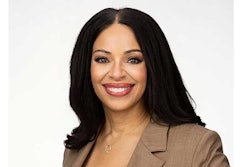
Breea C. Willingham spent 10 years as a reporter for papers in the Carolinas and New York State. She is now a journalism professor at St. Bonaventure University in Allegany, N.Y.
|
Reader comments on this story: |
|
There are currently no reader comments on this story. |
© Copyright 2005 by DiverseEducation.com