Deal or No Deal?
Tribal colleges are a convenient and affordable option for many non-Native students, but the benefits don’t necessarily go both ways.
By Mary Annette Pember
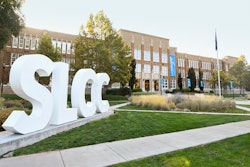
Education at a tribal college for non-Native students is “an awfully good deal for states,” says Dr. Joseph F. McDonald (Salish/Kootenai), president of Salish Kootenai College on the Flathead reservation in Montana.
It may come as a surprise to most Americans, but tribal colleges have been quietly providing higher education to a substantial number of non-Native, so called “non-beneficiary,” students for many years, despite the fact that they receive no state or federal funding for these students. Operational funding for the colleges is provided through the Tribally Controlled College and University Assistance Act, which mandates that the colleges maintain an open-door policy for all students, regardless of race.
Federal funding for tribal colleges is based on the number of enrolled students who are members of a federally recognized tribe. Non-beneficiary students don’t show up on those lists, and so don’t figure into the budgetary formula. Funding for these students is derived primarily from tuition, which is usually significantly less than comparable state institutions. But tuition often just barely covers the costs of educating the non-beneficiary students, placing a tremendous burden on the already cash-strapped colleges. States have been slow to pick up the slack, as to date only Arizona, Montana and Nebraska have provided any financial allocation to tribal colleges for the education of non-Native students.
As many as 20 percent of today’s tribal college students are classified as non-beneficiary, according to the American Indian Higher Education Consortium. Robyn Hiestand, the project manager of AIHEC’s American Indian Measures for Success data collection system, says the number appears to be growing at the rate of about 1 percent per year.
Currently, approximately 5,400 non-beneficiary students, mainly non-Natives, are pursuing associate and bachelor’s degrees at tribal colleges, at virtually no cost to their respective states. For an
unknown number of these students, it’s a case of simply not being native enough. While they may be of American Indian ancestry, they are neither part of federally recognized tribes nor meet tribal blood standards, making them ineligible for state or federal aid earmarked for American Indians.
For states whose tribal colleges educate non-Native students, it’s essentially a win-win situation. The states receive income and perhaps property taxes from the students without having to appropriate tax dollars to fund their education. And McDonald points out another benefit for the states.
“It’s pretty well proven that college graduates tend to be less of a liability for state and county services; they make good
citizens,” he says.
Montana’s eight tribal colleges have received sporadic state funding over the years. The state passed the Indian Education for All Act in 1999, but failed to provide any funding for its implementation until 2005. The budgetary allocation comes nearly 35 years after Montana ratified Article X of its constitution, which included education goals recognizing the distinct cultural heritage of the state’s 12 American Indian tribes.
Attracting non-Natives
The highest concentration of non-beneficiary students can generally be found on “checker board” reservations, or reservations in which American Indian land is not contiguous. The Dawes Allotment Act of 1887 authorized the federal government to divide reservation land and allot tracts to individual tribal members. The head of each household received 160 acres, with the remaining land available to non-Native homesteaders. Over time, many of the American Indian families either sold their property or lost it through more nefarious means. The result is that non-Natives in these areas often reside in areas surrounded by reservation land.
For students from the area, tribal colleges are a way to earn a college degree without having to pick up and move out of town. And the smaller class sizes provide more individual attention for new students.
South Dakota is among the states that provides no support for non-beneficiary students, despite repeated efforts among some members of the state legislature to secure funding, says Thomas H. Shortbull (Oglala), president of Oglala Lakota College and a former state senator.
“This is really an issue of equity. South Dakota state colleges are currently receiving around $3,900 per full-time student from the state,” he says.
But opponents in the Legislature contend that approving funds for tribal colleges would open the door for other private institutions to request similar funding.
Shortbull argues, however, that it’s an inaccurate comparison
because tribal colleges are not comparable to private entities.
“We are sovereign nations, and therefore, our colleges meet the same requirements as public institutions,” he says.
As South Dakota’s agricultural economy has slowed down in
recent years, more students are coming to tribal colleges in search of alternate careers. According to Shortbull, many of OLC’s
non-beneficiary students are choosing to study nursing or education.
“Tribal colleges do the same thing for non-Natives as for Indians, they provide valuable career training and keep people off public assistance,” he says.
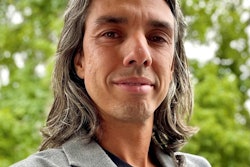
Andrew Zimmer, a White, 22-year-old from Pablo, Mont., grew up on the Flathead Reservation and is pursuing a bachelor’s in business at SKC.
The biggest draw for attending the college was convenience, says Zimmer who is student body president. Initially, he intended to leave after finishing some basic classes but “fell in love” with the college after two quarters. “I realized this was home,” he says. Zimmer hopes to earn a doctorate in business at the University of Montana and return to SKC as a faculty member. He says he likes the small community and has been impressed by the willingness of faculty and staff to help students whether they’re American Indian or not.
But it hasn’t always been easy being a non-Native.
Zimmer’s parents manage a fish and tackle shop in the area, but he and his family did not interact much with their Indian neighbors until his high school years. He was home schooled during his early grades.
“When I was 14, I got beat up for being a White kid in high school,” he recalls. He says he was often challenged for not being American Indian. “I got a first-hand look at racism from the
other side.”
Although students at SKC were a bit standoffish at first, Zimmer thinks his sincerity eventually won them over. “I try to do everything with a good heart. Once people here trust you, it’s like you’re part of a family.”
He says his experience has given him an appreciation for the richness and diversity of American Indian culture. Now, negativity from his American Indian classmates is the exception rather than the rule.
“The understanding that takes place between the [Native and non-Native] students is good for both communities,” McDonald says. “The diversity in the classroom teaches the students that they don’t exist in a vacuum.”
Editor’s Note: Haskell Indian Nations University and Southwest Indian Polytechnic Institute are funded through a different funding structure than the above-mentioned schools under the Bureau of Indian Affairs and accept only American Indian students.
© Copyright 2005 by DiverseEducation.com