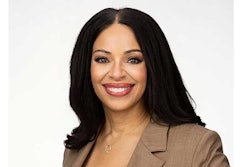
On numerous television and radio news shows over the past year, ranging from “Hardball” to “Hannity & Colmes,” Dr. Michael K. Fauntroy has analyzed and interpreted the role of race in the 2008 presidential election season. An assistant professor of public policy at George Mason University and a political scientist by training, Fauntroy is the author of Republicans and the Black Vote and he blogs regularly about American politics on his own Web site as well as on the The Huffington Post site.
“I see the public commentary as an extension of my work in the classroom. I see it as part of the requirements of being a professor. The blogging and column writing are all a part of that,” says Fauntroy.
It’s not surprising that as television news organizations have been cutting back on their news staffs, news shows have been relying more and more on news commentators and analysts like Fauntroy, to interpret as well as express opinions about news events. The trend towards expanding the role of analysts and commentators, or pundits as many call them, in television news has been most pronounced during the 2008 presidential election cycle, experts have noted.
“The fundamental trends transforming how people acquire news continued in the last year. More effort keeps shifting toward processing information and away from original reporting. Fewer people are being asked to do more, and the era of reporters operating in multimedia has finally arrived,” according to “The State of the News Media” 2008 report by the Project for Excellence in Journalism.
While there’s considerable debate brewing over whether the growing use of pundits in television news represents a positive or negative trend, the overall lack of diversity in broadcasting has some critics expressing deep concern about the near and long-term future of television news. While it’s noted that some networks have made a valid effort to feature minority commentators during the current presidential election season, experts worry that news organizations will continue to follow the familiar path of having minimal diversity among those appearing in front of the camera as well as among producers and news executives behind the camera.
According to the Radio-Television News Directors Association/Ball State University annual survey, minority representation in the U.S. broadcast news work force fell from 22 percent in 2006 to 21.5 percent in 2007.
“We still have a very long ways to go. We’re almost at the point where the U.S. population will be 35 percent people of color. By 2050, that percentage is supposed to reach 50 percent, and we might hit that mark sooner since we’re already at 34 percent. And the (television news) industry just is not keeping pace,” says Dr. Cristina L. Azocar, director of the Center for Integration and Improvement of Journalism at San Francisco State University.
Reactive Coverage
There’s no doubt that race surfaced as one of the most discussed and analyzed topics during the Democratic presidential primary season. Illinois Sen. Barack Obama’s successful run to capture the Democratic nomination, culminating in him becoming the first African-American to do so, invited all manner of comment and speculation about race, most notably when the news media raised questions about Obama’s relationship with the controversial Rev. Jeremiah Wright.
It’s been argued that the news media, especially on the television news side, were poorly prepared to handle some of the more controversial and complex issues, such as the Wright controversy, that surfaced this past spring.
“I will say compared to previous instances where race has been an issue the (2008) coverage is better, but it’s still not where I’d like to see it in terms of in-depth conversations about why things are the way they are,” Fauntroy says.
“More often than not, it’s ‘let’s get some talking heads and talk about race’ as more of a reaction than anything else. It’s ‘What do Black people think about Jeremiah Wright or Michael Pfleger?’ … as opposed to dealing with some of the more deep-seated issues,” he adds.
Fauntroy cites CNN’s “Black in America” series aired during the height of 2008 campaign coverage this year as a rare example of how a television network has moved beyond the posture of providing only ‘reactive’ coverage of racial issues. While he’s been pleased to have the opportunity for television and radio appearances, he explains that the dramatic surging of race as an issue this election year has made constant exposure possible for him.
“I have been doing a fair amount of radio and TV over the course of the last year or so, primarily surrounding issues of race as they impact the Obama campaign. And the overwhelming number of producers with which I’ve had contact are White. And many of them either haven’t covered this beat regularly or long enough to have anything more than a cursory understanding of the issues,” Fauntroy says.
Dr. Earnest L. Perry, the chair of journalism studies emphasis and an associate professor at the University of Missouri School of Journalism, says there appears to be noticeable diversity among the ranks of analysts and pundits that’s been part of the television news coverage of the 2008 presidential campaign. Nonetheless, he gives low overall marks to campaign coverage by broadcasters for allowing nonjournalist commentators too large a role. He believes that wedge issues, such as race, have too often overshadowed voter concerns, such as the economy.
“If I were grading (broadcasters), I would probably say they’ve done a C-, close to a D, in the presidential election, mainly because so much of (the coverage) is driven by the pundits and not by journalists out in the field actually covering the news that’s happening and talking to people,” Perry says.
“I think the downside of it is that people who are looking for in-depth information, or some sort of information that they can use in order to make an informed decision about which candidate they are going to back, aren’t going to necessarily find it in a lot of the mainstream media coverage because so much of it is opinion-based and not fact-based,” he adds.
Going Forward
Even though some journalists, such as Perry, and media critics have decried the trend towards expanding the role of pundits and commentators in television news, others say the trend has added valuable perspectives to news programs. Asked recently on a segment of PBS’ “The Newshour With Jim Lehrer” about whether punditry and reporting sow confusion among television news viewers, Callie Crossley, an award-winning documentary maker on the “Eyes on the Prize” series and a former ABC News producer, praised the move to add different voices to news programs.
“I don’t know so much that it’s confusing. I do think there’s a little bit of that. But there are so many new voices out there now. I think that’s a good thing overall, in terms of having people being able to find information and read a lot of opinions all across the spectrum, so that’s a good thing,” Crossley says.
Crossley, who is African-American, appears regularly as a media critic on the PBS show “Beat the Press” and is a program manager at the Nieman Foundation for Journalism at Harvard University.
SFSU’s Azocar says that, whether or not news broadcasters are showcasing commentators and pundits of diverse racial and ethnic backgrounds they’re going to have to reconsider their overall commitment to diversity. She believes this is especially true if national and local television news audiences continue to shrink as they have in recent years.
“I often wonder if one of the effects of not having people of color in reporting roles — and especially behind the scenes making the decisions of what gets aired — is related at all to the declining populations of people reading news, paying attention to television news and listening to radio,” she says.
Fauntroy cautions that, given the prominence of race in the 2008 presidential campaign, news organizations would be wise to strengthen their expertise in covering race and seek greater diversity among their journalists and producers.
“When the election’s over, particularly if McCain wins, then where will all these (minority pundits) go? Will they continue to be heard? Or will they be called upon only when there’s a problem?” Fauntroy asks.
“I’m not particularly optimistic going forward beyond the elections unless Obama is elected and somehow race becomes an ongoing issue,” he notes.
Click here to post and read comments
© Copyright 2005 by DiverseEducation.com