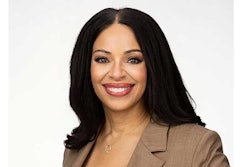
In her junior year of high school, Dr. Patty Alvarez McHatton, an assistant professor in the Department of Special Education at the University of South Florida, was called to the principal’s office. She had decided to quit cheerleading, and the principal urged her to reconsider.
With a tone of both disbelief and disappointment, she describes the reaction from the same principal when she dropped out of school a few months later.
“Nobody called me into the office to talk me out of it,” McHatton recalls. She eventually earned a GED and became a licensed master electrician. Later, upon hearing a radio news story about a rise in juvenile delinquency and crime, something clicked.
“My heart was like, ‘I have the skills to be able to work with kids most people consider difficult. I can do that. I can make a difference in their life.’ I know it sounds hokey, but I’ve never regretted it,” she says. Almost two decades after leaving school, McHatton returned. First earning her associate degree at Hillsborough Community College and eventually attending the University of South Florida where she earned her doctorate. Her focus is special education students, particularly those labeled as having “behavioral problems.” In many cases, she says the experiences her students share with her m i r ror her own growing up, as a Cuban immigrant forced to fully immerse herself in a new language (English) and culture (American).
“I work with students of color and hear teachers say ‘they come from such a difficult area, such a hard life,’” McHatton says. “All that does is cripple us. Teachers have to push us.”
As part of a project with some of her doctoral students pursuing their education degrees, McHatton works with community center teens and pre-teens in the Tampa, Fla., area — some of whom are Hispanic — to encourage them to stay in, or return to, school.
“They talk about teacher behavior. They admit they may have made bad decisions, but with a lot of things, they say, ‘(teachers) thought I was bad; I might as well be bad.’ It’s a self-fulfilling prophecy,” she says. “You hear how they were kind of pushed out.”
McHatton’s latest research project in cooperation with the nonprofit literacy organization I CAN! Community Education Coalition, Inc. gives these on-the-edge students a voice, with the goal of enlightening teachers how their behavior can make the difference in whether a student decides to stay or leave school. “What she’s done with these young people is groundbreaking,” says Michelle Tate- Martin, I CAN!’s executive director and founder. “It’s innovative. To hear kids say why they dropped out and what needs to be done to prevent that is invaluable.” McHatton, who formerly worked in a middle school with students classified as having “behavioral problems,” admits she misses the direct interaction she had with teens. But she believes her current role as an assistant professor allows her to reach more students. “If I’m in my own K-12 classroom, I can hopefully make a difference with 15, 25, 30 kids a year.
If I’m teaching teachers, it’s 30 kids times my 30 students over how many years I teach. So, idealistically, I’m able to make a bigger difference,” she says.
© Copyright 2005 by DiverseEducation.com