AIDS Treatment Study in Africa Enrolls First Participants
CHAPEL HILL, N.C.
After overcoming numerous financial and governmental obstacles, doctors have enrolled five people infected with HIV, the virus that causes AIDS, in the first National Institutes of Health-funded AIDS treatment research study in Africa.
When those patients complete four weeks of successful therapy, another 15 will be enrolled at a Johannesburg, South Africa, clinic. Eventually, 355 more patients at multiple clinics in the United States will participate in the study, which will examine strong antiretroviral therapy and determine if doctors can rely on patients to take medicines on their own.
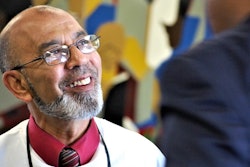
NIH has funded several previous HIV prevention trials in Africa but no treatment studies of HIV-infected patients there, says Dr. Charles van der Horst, professor of medicine and infectious diseases at the University of North Carolina at Chapel Hill and visiting professor at the University of the Witwatersrand. He and Dr. Ian Sanne, director of the Witwatersrand’s AIDS Clinical Trials Unit, began a partnership between UNC and the South African university to develop and expand HIV clinical research on the continent hardest hit by the deadly pandemic.
“This is an enormous milestone,” van der Horst says. “It also is a wonderful feeling to witness the excitement on patients’ faces on the enrollment day.”
Named AACTG 5073, the 48-week trial will compare the effectiveness of antiretroviral treatment given once a day with treatment given twice daily, van der Horst says. Since compliance with prescribed dosing is a major problem with HIV-infected people in the United States, researchers also will determine if having medical staff watch patients take pills results in better health than allowing them to do it at home.
If patients do not take the drugs correctly, the virus can mutate, or change, and then the treatments will no longer work, he said. That mutant virus also can be transmitted from mother to child at birth and between sexual partners making it a public health problem and not just an individual patient problem.
During drug treatment, doctors will regularly monitor virus levels in patients’ blood. After the 48 weeks, participants will be followed medically and treated free for four years.
About 15 percent of the world’s AIDS cases are in South Africa, which has about 4.7 million infected people, the physician said. At least 25 percent of them need treatment immediately. On Aug. 8, the South African government announced a historic program to begin treatment, but many hurdles remain before full implementation.
An estimated 30 million people throughout Africa carry the virus.
© Copyright 2005 by DiverseEducation.com