Sometimes it takes a wrong decision to make things right. This month marks the 150th anniversary of the Supreme Court’s decision on the Dred Scott case. This anti-civil rights ruling upheld the status-quo that African-Americans were property and had no rights as citizens. The decision on March 6, 1857, said Scott would remain a slave. The ruling is generally seen as hastening the onset of the Civil War and even ending slavery in this country perhaps two decades early. The event should be remembered for what it says about us and what it takes to change a way of life.
Dred Scott was born a slave in the early 1800s in Southampton County, Virginia. He was taken to Missouri. His master, army surgeon John Emerson, took Scott to Illinois, a free state, and then to what is now Minnesota, a free territory. Emerson returned to Missouri, a slave state, in 1838. Scott sued for his freedom, claiming he had become emancipated when he entered free territory.
The suit reached the Supreme Court under Chief Justice Roger Brooke Taney. Taney was born on a plantation in Calvert County, Md., and moved to Frederick County. The Court could have ruled on the narrow issue of whether Scott had standing to sue in Missouri. Instead, Taney gave a long decision, hoping to settle the question of the expansion of slavery by saying: African Americans, either free or slave, were not citizens of the United States; slaves were property and could not sue; and features of the Missouri Compromise banning slavery were unconstitutional.
Instead of settling the slavery issue, the decision so inflamed citizens and the newly formed pro-abolitionist Republican party, that had won a majority in the House of Representatives in the last mid-term elections, that the decision contributed to the outbreak of the Civil War.
We should remember to better understand our past. We should also remember to see how far we have come: from the highest court in the land saying African Americans were not citizens, to their sons and daughters holding statewide elective office and serving in Congress. Elected African Americans now include individuals from the former slave-holding states of Virginia and Maryland, including former Virginia Gov. Doug Wilder, in Maryland, Lt. Gov. Anthony Brown and former Lt. Gov. Michael Steele. On Capitol Hill, elected African Americans from these former slave-holding states include Democratic Representatives Elijah Cummings and Bobby Scott.
We should remember because, despite the progress, much needs to be done in terms of employment, health care, and education. For many years the Black unemployment rate has been twice that of Whites. Delivery of health services to African Americans is below that of the average American, resulting in higher infant mortality at the beginning of life, shorter life expectancy at the end of life, and a higher prevalence of disease during their lifetime. Despite substantial increases in the number of African Americans with college degrees, many do not have an opportunity to remain in school to reach their full potential.
Let us not forget how far the country has come, nor how far it still has to go.
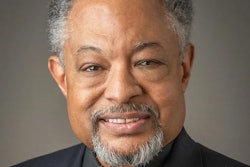
Dr. Walter Hill is an associate professor of political science and department chair at St. Mary’s College of Maryland. He teaches within the African and African Diaspora Studies Program.
There are currently 0 comments on this story.
Click here to post a comment.
© Copyright 2005 by DiverseEducation.com